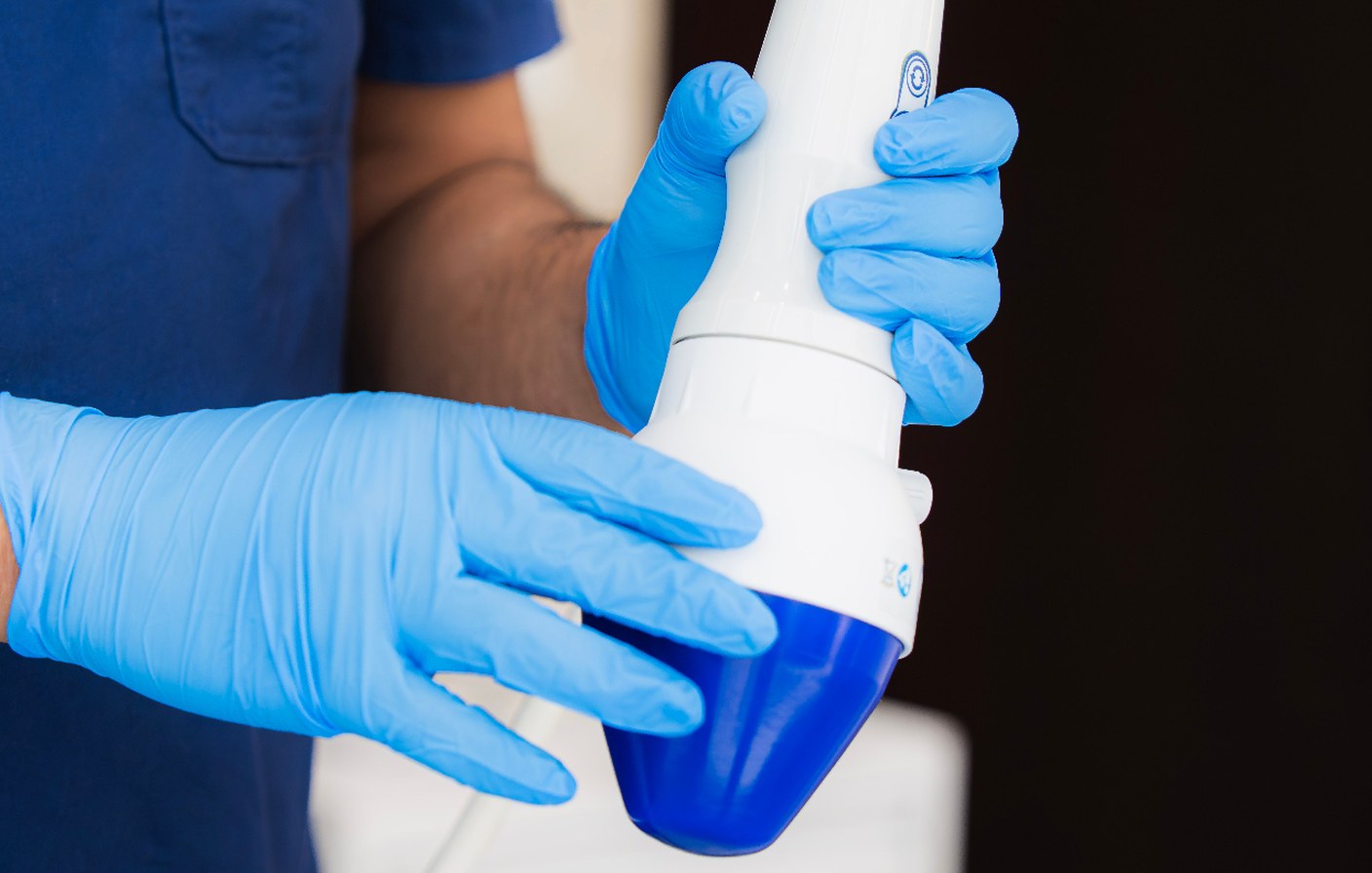
"Shockwave therapy" is used loosely in clinics worldwide, but it covers three very different technologies, and they are not interchangeable for erectile dysfunction.
- Radial pressure waves (RSWT). Generated by a pneumatic projectile striking an applicator head. These are pressure waves, not true shockwaves: the energy peak is at the skin surface and diffuses rapidly. RSWT devices are cheaper and widely marketed for ED, but the published ED evidence base does not use them - it uses focused shockwaves. Outcomes from focused trials cannot be claimed for radial machines.
- Electrohydraulic focused shockwaves. Generated by a spark gap inside a water-filled reflector. Effective but with broader focal zones and higher pulse-to-pulse variability, which makes reproducible dosing harder.
- Electromagnetic focused shockwaves. Generated by an electromagnetic coil and a precisely-shaped acoustic lens. Energy is focused at a defined depth with reproducible energy flux density. This is the technology used in most of the high-quality randomised trials of Li-ESWT for ED.
The Dornier Aries 2, built by Dornier MedTech, is an electromagnetic focused Li-ESWT platform purpose-engineered for sexual medicine and andrology. Dornier is the same company that pioneered medical shockwave technology with the first clinical lithotripter in the 1980s - the foundational engineering lineage behind modern focused shockwave devices.
Why this matters clinically:
- Reproducible energy flux density at every pulse, so the dose the patient receives matches the dose used in the published protocols.
- Precise focal depth targeting the corpora cavernosa and crura where neovascularisation needs to occur.
- Documented use in the peer-reviewed Li-ESWT-for-ED evidence base, including trials and meta-analyses published in European Urology, the Journal of Sexual Medicine and International Journal of Impotence Research (see references below).
An honest caveat: the device is necessary but not sufficient. Protocol fidelity (number of pulses, energy flux density, anatomical mapping), operator training and patient selection matter as much as the platform itself. Hisential combines a research-grade device with a structured protocol and an MMC-registered medical team rather than relying on one factor in isolation.