
Cardiac care · in depth

CT Coronary Imaging: High-Precision Screening for Intermediate-Risk Men

A CT calcium score (CAC) and CT coronary angiogram (CTCA) are increasingly used as high-precision screening tools for men at intermediate calculated cardiovascular risk. They show sub-clinical atherosclerotic plaque directly - years before symptoms appear - and reclassify a meaningful share of patients up or down a risk band. That single result changes whether you need a statin, a tighter LDL target, blood-pressure intensification, or aspirin.

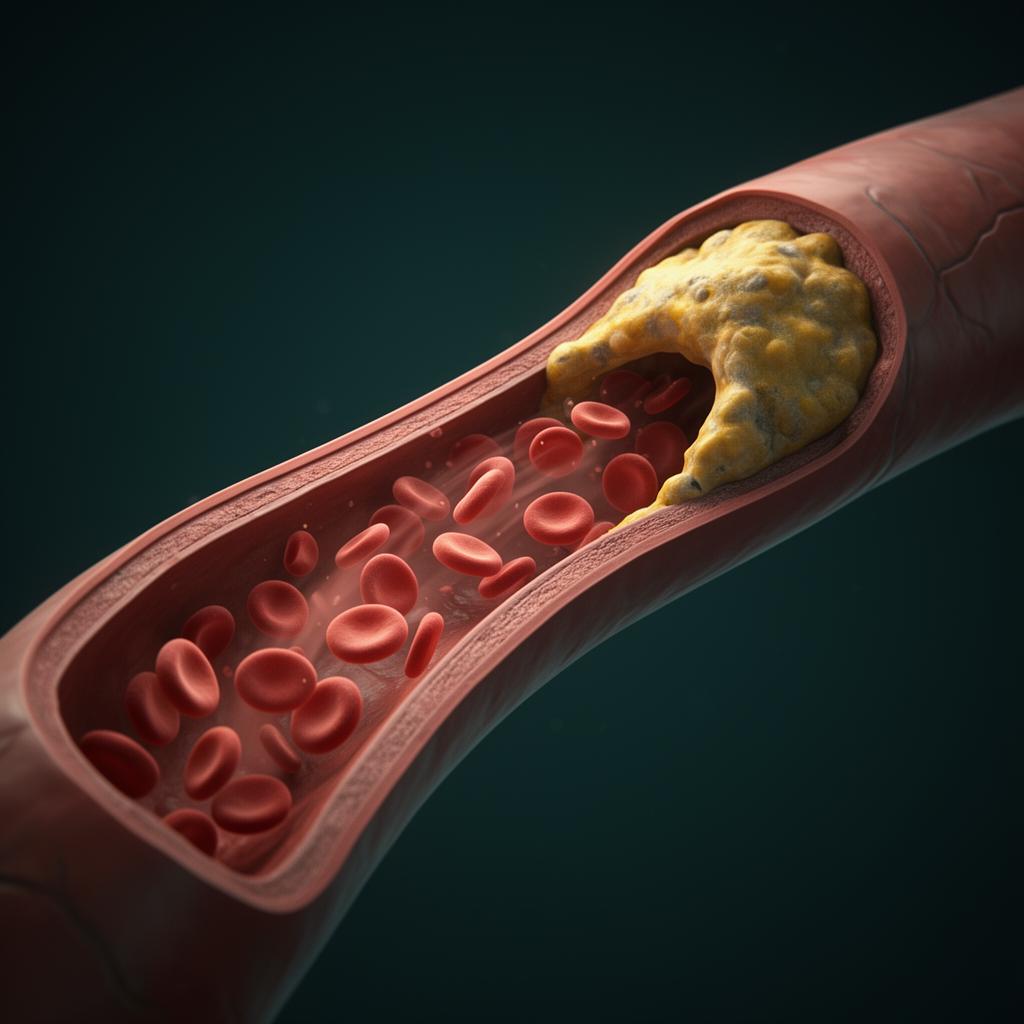
Cutaway of a coronary artery partially blocked by atherosclerotic plaque, with red blood cells flowing through the narrowed channel - CT coronary imaging.

Quick answer

Risk calculators (Framingham, ASCVD, SCORE2) put most middle-aged men in an intermediate band that the calculator alone cannot resolve. A CT calcium score is a quick, low-radiation, no-contrast scan that quantifies calcified plaque in the coronary arteries; a CT coronary angiogram adds soft (non-calcified) plaque and lumen detail. Together they reveal sub-clinical disease that physical exam, ECG and lipid panels miss, and the result changes the plan: a zero score typically defers statin therapy, a meaningful score triggers earlier and more aggressive prevention. At Hisential our MMC-registered medical team orders both directly at partner hospitals, without requiring a prior cardiologist referral.

Medically reviewed by Dr. Azzim Emir, MBChB, Cert. Andrology (SMHS)

Last reviewed 1 May 2026 · Next review 1 November 2026

Why intermediate-risk men are the right group to image

Standard cardiovascular risk calculators (Framingham, ASCVD, SCORE2) use age, sex, blood pressure, cholesterol, smoking and diabetes to produce a probability of an event in the next ten years. They work reasonably well at the extremes - someone clearly low-risk usually is, someone clearly high-risk usually is - but the majority of middle-aged men land in an intermediate band where the calculator alone cannot tell you whether to start a statin, how tightly to drive LDL, or whether to consider aspirin.

CT coronary imaging cuts through this ambiguity by showing the disease itself, not a statistical estimate. Plaque is either present in your arteries or it is not. That binary, plus the quantitative score, reclassifies a large share of intermediate-risk men: roughly half are moved down (low burden, defer therapy, recheck in years) and a meaningful minority are moved up (significant burden, start treatment earlier and more aggressively than the calculator suggested).

This is the key shift in modern preventive cardiology: stop treating averages, start treating the individual artery.

CT calcium score (CAC) explained

The CAC scan is a non-contrast CT of the heart that takes a few minutes, requires no preparation, no needles and no medication, and delivers a radiation dose of roughly 1 mSv - similar to a few months of natural background radiation, and well below a standard chest CT.

The result is the Agatston score, a number reflecting the amount of calcified plaque in your coronary arteries:

  • 0: no detectable calcified plaque. In a man over 45 this is genuinely reassuring and substantially lowers estimated 10-year event risk.
  • 1 to 99: mild plaque. Suggests subclinical disease and usually shifts the plan toward earlier preventive therapy.
  • 100 to 399: moderate plaque. Typically reclassifies the patient as high-risk and justifies statin therapy with a tighter LDL target.
  • 400 or above: extensive plaque. Very high cardiovascular risk; intensive multi-factor prevention is warranted.

The score does not measure soft, non-calcified plaque and does not assess lumen narrowing - for that, CTCA is the right test.

CT coronary angiogram (CTCA) explained

CTCA is a contrast-enhanced CT that produces three-dimensional images of the coronary arteries themselves: the lumen, the vessel wall, calcified plaque and soft (non-calcified) plaque. It is typically performed with a heart-rate-lowering medication beforehand so the scanner can capture motion-free images, and it uses iodinated contrast.

CTCA is the right test, instead of (or in addition to) a CAC score, when:

  • A younger man with a strong family history of premature coronary disease needs the most sensitive imaging - soft plaque can be present even when calcium is zero.
  • The patient has atypical chest pain, breathlessness on exertion, or borderline stress test findings, and obstructive disease needs to be ruled out non-invasively.
  • The CAC score is moderate and the question is whether there is significant lumen narrowing in any single vessel.
  • An invasive coronary angiogram is being considered but a non-invasive alternative is preferable.

Large trials (SCOT-HEART, PROMISE) have shown that adding CTCA to standard care reduces non-fatal myocardial infarction over 5 years, principally by getting the right men onto preventive therapy earlier.

How a CT result changes the plan

The point of the scan is not the number itself, it is what changes the next morning. Three concrete patterns:

  • 50-year-old man, borderline LDL, no family history, CAC = 0. Statin can usually be deferred. Plan: lifestyle, blood-pressure target, recheck CAC in 5 years.
  • Same man, CAC = 150. Reclassified to high risk. Start statin (often plus ezetimibe), tighten LDL target by one band, treat blood pressure to target, consider low-dose aspirin if bleeding risk allows. The scan is what triggers therapy that would otherwise have been delayed.
  • 45-year-old man, strong family history, CAC = 0 but CTCA shows non-calcified plaque. Soft plaque without calcium is a meaningful finding; treat as high-risk despite the zero CAC. Aggressive LDL lowering and full risk-factor control.

This is what "high-precision, targeted prevention" means in practice: each man's treatment intensity is set by what is actually in his arteries, not by a population-average risk score.

Direct access at Hisential - no cardiologist referral required

Our MMC-registered medical team orders CAC scoring and CTCA directly at partner hospitals as part of your cardiovascular workup. You do not need a prior specialist consultation. This is faster and lower total cost than the conventional GP-to-cardiologist-to-scan pathway.

Your personal health concierge handles the entire process: booking the scan at a convenient partner hospital, receiving the images and the radiologist's report, and integrating the findings into your wider preventive plan. If the result warrants formal cardiology review (for example, significant lumen stenosis on CTCA), your concierge arranges that referral too.

Safety, radiation and limitations

A CAC scan uses roughly 1 mSv - similar to a few months of natural background radiation. A CTCA uses more (typically 3 to 5 mSv with modern protocols) because of the wider acquisition window and the need for higher temporal resolution. Both are well within the dose ranges considered acceptable for clinically indicated cardiac imaging.

CT coronary imaging is not for everyone. It is most valuable in men at intermediate calculated risk where the result will change management. It adds little for men who are clearly low-risk (where treatment is already not indicated) or for men with already-established cardiovascular disease (where treatment is already at maximal intensity). CTCA additionally requires iodine contrast, so it is avoided in significant contrast allergy or severely impaired kidney function.

Selected references

  1. Visseren FLJ, Mach F, Smulders YM, et al. 2021 ESC Guidelines on cardiovascular disease prevention in clinical practice. Eur Heart J. 2021;42(34):3227-3337. (Coronary artery calcium scoring for risk reclassification in intermediate-risk individuals.)
  2. Arnett DK, Blumenthal RS, Albert MA, et al. 2019 ACC/AHA Guideline on the Primary Prevention of Cardiovascular Disease. Circulation. 2019;140(11):e596-e646. (CAC as a decision aid in borderline and intermediate-risk adults.)
  3. Grundy SM, Stone NJ, Bailey AL, et al. 2018 AHA/ACC/Multisociety Guideline on the Management of Blood Cholesterol. Circulation. 2019;139(25):e1082-e1143. (CAC scoring to refine statin decisions in intermediate-risk patients.)
  4. Detrano R, Guerci AD, Carr JJ, et al. Coronary calcium as a predictor of coronary events in four racial or ethnic groups (MESA). N Engl J Med. 2008;358(13):1336-1345.
  5. SCOT-HEART Investigators. Coronary CT angiography and 5-year risk of myocardial infarction. N Engl J Med. 2018;379(10):924-933.
  6. Min JK, Dunning A, Lin FY, et al. Age- and sex-related differences in all-cause mortality risk based on coronary CT angiography findings: results from the international multicenter CONFIRM registry. J Am Coll Cardiol. 2011;58(8):849-860.

Frequently asked questions

FAQ

Frequently asked questions

Clear answers, written by our clinical team. Tap any question for its direct permalink, or reach out to your Personal Concierge for anything else.

  1. Who should consider a CT calcium score?

    Men in their 40s and older with an intermediate calculated 10-year cardiovascular risk, a family history of premature coronary disease, borderline or hard-to-interpret LDL, metabolic syndrome, or anyone where the question is whether to start preventive therapy and the answer is genuinely uncertain. It is most useful when the result will change what we do next.

  2. Do I need a cardiologist referral to get a CAC or CTCA at Hisential?

    No. Our MMC-registered medical team orders both directly at partner hospitals as part of your cardiovascular risk workup. This avoids an unnecessary specialist consultation and is faster and lower-cost. Your concierge coordinates the booking and integrates the result into your plan; onward cardiology referral is arranged only if the findings warrant it.

  3. CAC or CTCA - which one do I need?

    CAC is the right first test for most men being screened. It is faster, cheaper, uses less radiation, and the score reliably reclassifies intermediate-risk men. CTCA is reserved for younger men with a strong family history (where soft plaque without calcium matters), atypical symptoms requiring direct visualisation, equivocal CAC results, or where a non-invasive alternative to invasive angiography is needed.

  4. What does a CAC score of zero actually mean?

    In a man over 45 a true zero score indicates no detectable calcified plaque and substantially lowers your estimated 10-year cardiovascular event risk. It typically justifies deferring statin therapy and rechecking in 5 years. It does not, however, rule out soft (non-calcified) plaque, which is why CTCA is preferred in selected younger high-risk men.

  5. How often should the scan be repeated?

    If your initial CAC is zero, a recheck in around 5 years is usually appropriate. If your CAC is non-zero and you are already on preventive therapy, repeating the scan is rarely needed - the score does not reliably regress, and treatment decisions are then driven by LDL and other risk factors, not by re-scanning.

  6. What happens if the scan finds something serious?

    A high CAC or significant CTCA finding triggers intensification of every modifiable risk factor: stronger lipid-lowering, blood-pressure to target, glycaemic control, smoking cessation, and aspirin where appropriate. If CTCA shows obstructive disease, your concierge arranges formal cardiology review for further evaluation - which may include stress imaging or, occasionally, invasive angiography.

Still have a question?

Your Personal Concierge replies within one business day - confidentially.

Continue exploring

Speak to your personal health concierge

One dedicated contact who coordinates your assessment, testing, treatment plan and follow-ups end-to-end. Confidential by default.